


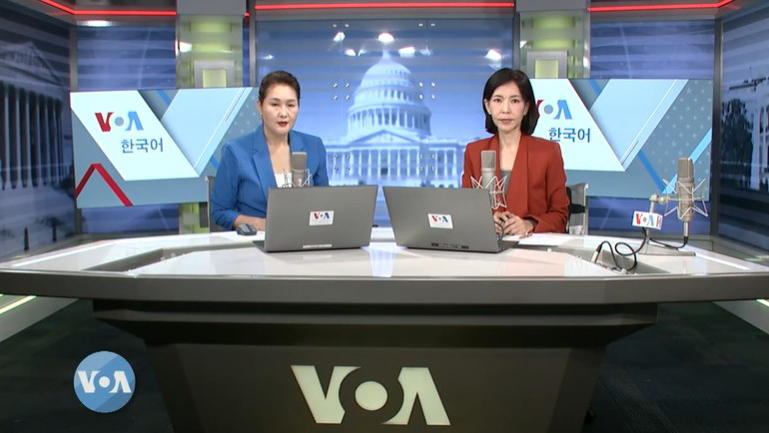
Voice of America has resumed Korean-language programs for North Korea with a bold strategy of 24-hour broadcasting, but given everything we know about the audience in North Korea, will anyone be listening during the day?
VOA returned to the airwaves in Korean over the summer after its forced shutdown last year. Its new shortwave schedule began on October 25 and is on air all day in Korean. Seven hours of the programming is live while the rest of the programs are reruns.
Here’s the planned broadcasting schedule by frequency and time:
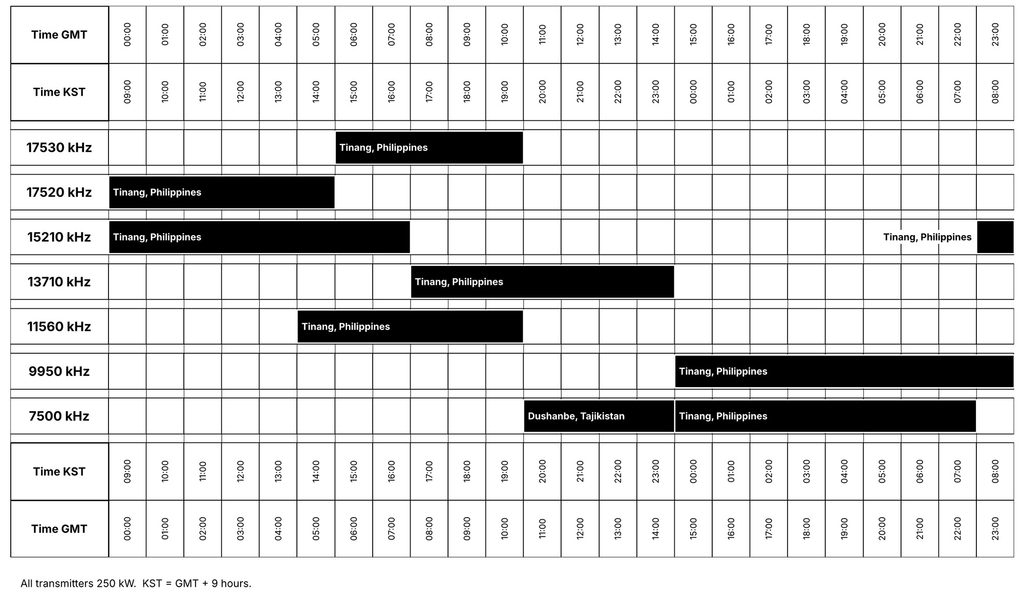
From 2000 until 1400 local time, only two transmitters are on the air then three in the afternoon. Adding up these transmissions, we find VOA Korean is filling 54 transmitter hours a day—a big jump from the 20 transmitter hours it occupied last year.
Those hours were coordinated with Radio Free Asia so only one of the two US Government-operated stations was on the air at any one time, although that coordination seems to have stopped.
Most of the broadcasts come from the US Government’s shortwave transmitter site in Tinang, the Philippines, although during the prime evening hours, the service has to make use of a transmitter in Tajikistan. This is presumably because the transmitters in Tinang are busy with other language services.
So, VOA is on the air for more hours each day, but will people be listening?
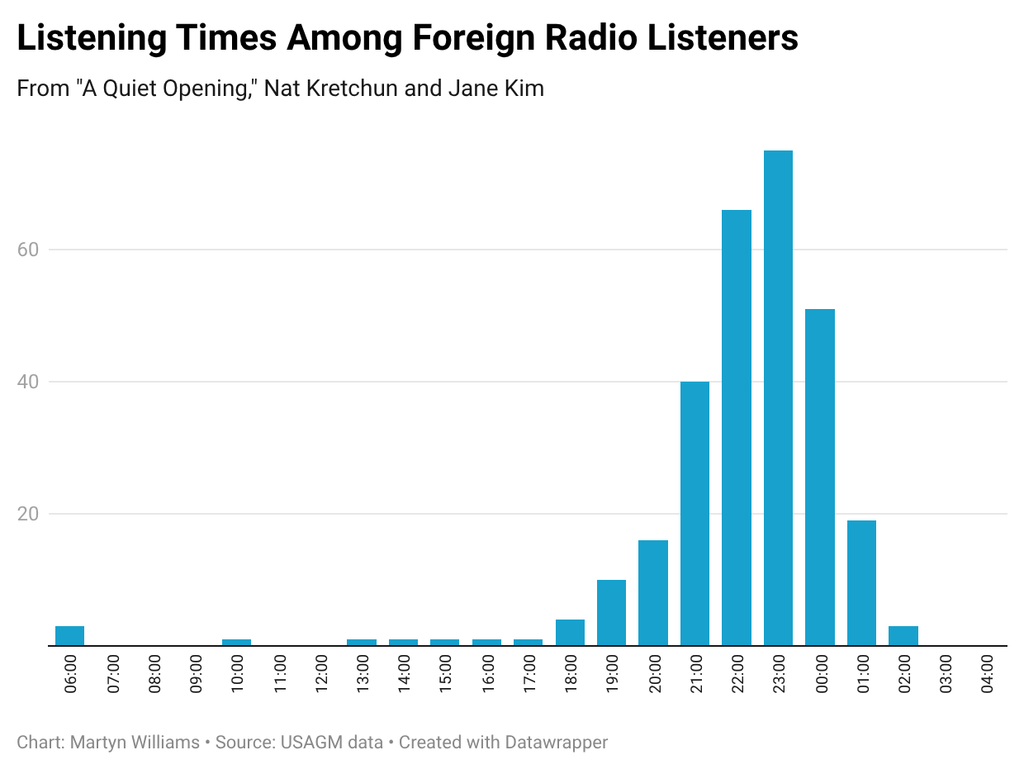
Surveying listeners in North Korea is tough, and most surveys ask North Koreans who have either escaped the country or are temporarily in China. Sample sizes are small and data incomplete, but surveys conclusively show the same thing: most listening is done at night.
Overwhelmingly, North Koreans tune into foreign broadcasting stations between 2200 and 0100, when listening drops off until a number return around 0500 or 0600. This is generally because this is when people are at home and when they can quietly listen with less worry about people coming into their homes. It is also when shortwave reception is better.
Very few, if anyone is listening during the day, according to surveys. Here’s some data from “A Quiet Opening.” The report is about 15 years old, but more recent reports, such as those by Unification Media Group, report the same.
Until it was forced off air last year, VOA and sister-station Radio Free Asia (RFA) answered this with programming between 1900 and 0700 local time. During the peak hours, VOA and RFA were on three or four frequencies simultaneously.
The number of simultaneous transmitters is important because the more there are, the more difficult it is for the North Korean authorities to jam the broadcasts. The switch to two frequencies could make jamming easier.
Of course, VOA and RFA are not the only broadcasters that target North Korea. The South Korean government had several stations on the air until last year, including some that broadcast 24 hours a day, so perhaps there is an audience.
Voice of the People and Echo of Hope each used seven transmitters simultaneously to beat North Korean jamming and broadcast throughout the day. South Korean public broadcaster KBS also maintains 24 hours a day broadcasting to North Korea.
Another hurdle VOA faces is audiences finding its programs. Since it abruptly went off the air last year, regular listeners will likely have given up looking for it, so it will take the broadcaster some time to rebuild its listener base.
Luckily, the station should be easy to find for those with illicit radios. The 300-kilowatt transmitter in the Philippines delivers a very strong signal across the Korean peninsula, especially at night and so far, it appears North Korean jamming has not caught up with the new broadcasts.