
All four of North Korea’s state-run domestic TV channels are being distributed by satellite for the first time. The new feed provides a backup to the country’s existing terrestrial distribution system and could help expand TV coverage to more regions of the country. It could also make possible direct reception of state TV with small dishes by North Korean homes, although that would be fraught with risk for the state.
The new distribution demonstrates further cooperation between North Korea and Russia, which operates the satellite and provides the scrambling system used on the new channels.
Korean Central Television has been distributed via satellite since July 1999 and can currently be viewed on two satellites: Russia’s Express 103 covering North Korea, Russia, China, central Asia and nearby areas, and Intelsat 21, covering the Americas and Europe.
Since January 2026, a third feed of KCTV has appeared on the Express-AMU3 satellite, another Russian satellite. On this feed, North Korea’s three other terrestrial channels: Ryongnamsan TV, Mansudae TV and Sport TV are also being carried, according to Christian Lyngemark who runs the Lyngsat satellite listings website. This is the first time the three other channels have been available via satellite.
Satellite TV broadcasts take place in two frequency bands: C-band, which requires a large dish around 2-3 meters in diameter, and ku-band, which requires a dish of around 1 meter or less. Almost all direct-to-home satellite services around the world, such as Sky and DirecTV, use the latter ku-band because of the smaller dishes.
The two existing KCTV transmissions are in C-band but the new feed on Express AMU3 is in ku-band. This means reception with a small dish and immunity to interference from 5G wireless signals, which have caused an issue with C-band satellite channels recently (although would not be a problem in North Korea).
The coverage of Express AMU3 is quite wide, covering a large part of Russia and Asia and signals should be easy to receive. In North Korea, reception should be possible with a dish of around 60cms.
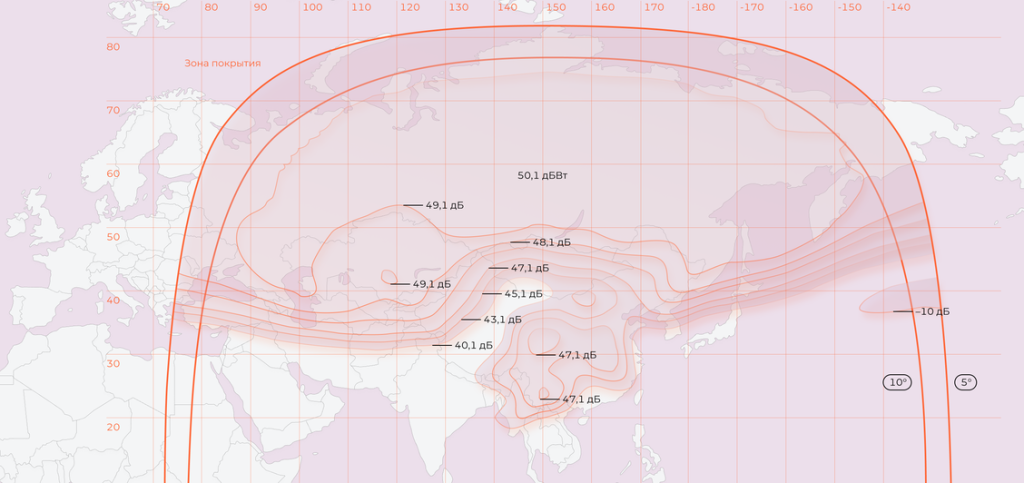
The reason for the new feed is unknown.
Some North Korean TV transmitters already have satellite dishes on-site, likely as a back-up in case a terrestrial connection fails, but the feed has only carried KCTV. It is by far the most important TV channel in the country, but it would be preferable to have all four channels available.
The new feed accomplishes that, but the three channels could have been added to the existing C-band feed on Express 103, so why go for a new satellite and why ku-band?
It could be to take advantage of smaller, cheaper dishes at its TV transmission sites, although the cost difference is not hugely significant and all other equipment is the same.
Another possibility is that the state might be preparing to allow direct reception by North Korean homes in areas not well covered by the existing terrestrial network, but that could be risky for a government that jails people for accessing unsanctioned foreign information sources.
At present, it appears that the North Korean channels are the only ones carried on Express AMU3 in ku-band, but if other channels appear on the satellite, they could potentially be available to North Korean viewers.
According to Lyngsat, the new KCTV feed is unencrypted but the other three channels are encrypted using “GostCrypt,” a Russian scrambling system used on other Russian satellite channels.
If North Korea was to go ahead with allowing direct reception, it could conceivably provide a satellite receiver programmed to tune only to North Korean channels, but it would still represent a risk for the regime if satellite dishes were to become normalized in North Korea.
Another possibility is that the feed was set up to provide North Korean TV to citizens living in China and Southeast Asia. North Korean workers overseas are often restricted from accessing local media and the Internet while living outside of the country.
Leave a Reply
You must be logged in to post a comment.