
How much does it cost to buy a smartphone and data package in North Korea? Concrete numbers for the former are difficult to come by, but I’ve managed to find a couple of sources that suggest phone prices are not too far removed from those found in Western economies. Data packages too are not too dissimilar from other countries.
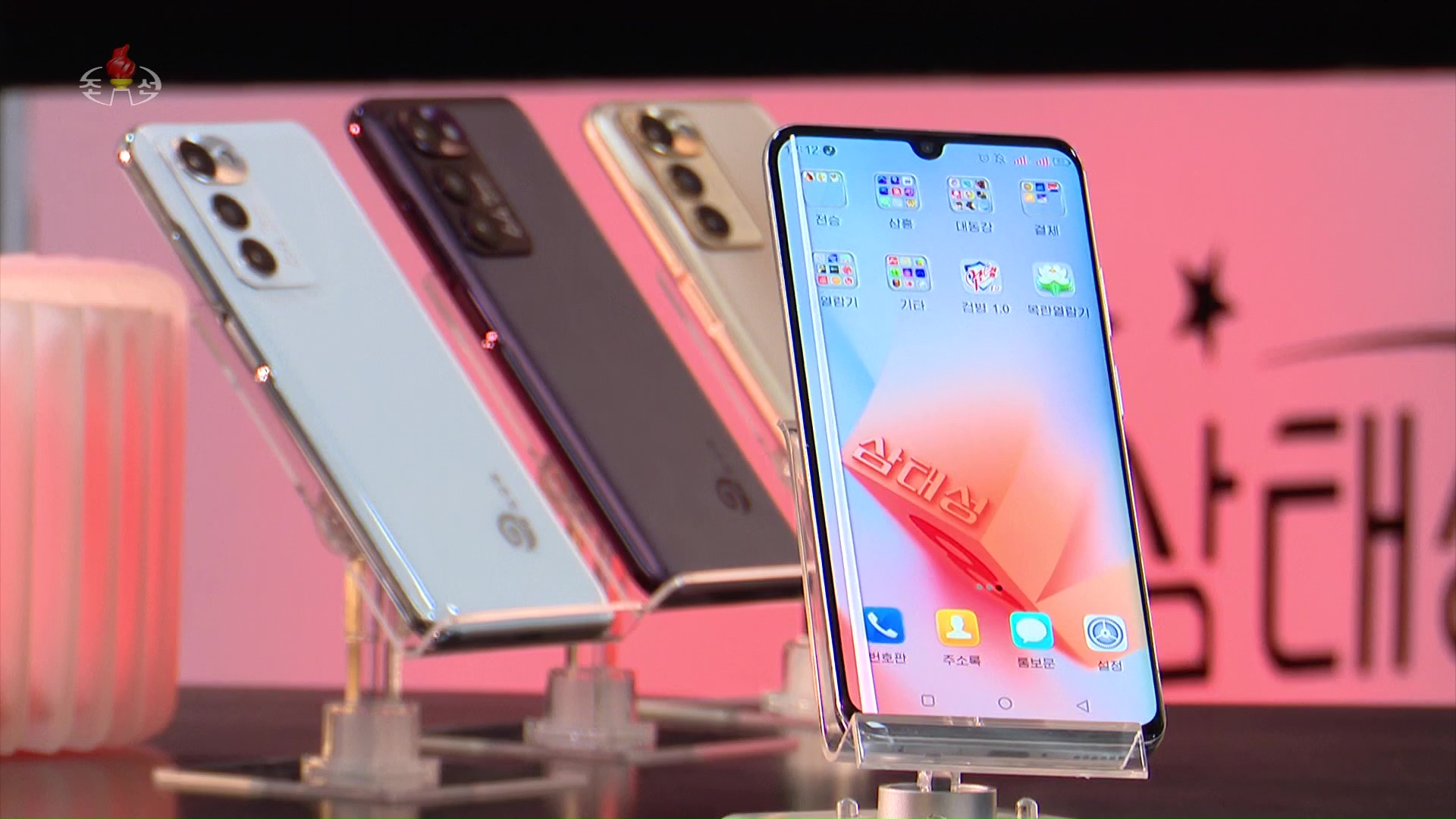
That’s perhaps not a surprise as the smartphone sector runs the same way in North Korea as most other countries: phones are sourced from Chinese OEM manufacturers who supply finished handsets to North Korean companies that carry local branding. Once the phones arrive in North Korea, the country’s version of the Android operating system and local apps are installed on the device before it goes on sale.
The market appears to be quite competitive with multiple brands of smartphones available. Many brands also offer feature phones, suggesting a significant portion of the population either can’t afford or don’t see the need for a smartphone, but do want a phone.
The latest data from the International Telecommunications Union says there were 5.79 million mobile broadband subscriptions in North Korea in 2024 and 6.35 million mobile phone subscriptions. North Korea hasn’t provided data on fixed-line telephones to the ITU since 2007, but at that time it only had 1.18 million lines, so cellular could easily be greater than fixed-line now, as it is in many developing nations.
Phone Prices
Domestic advertisements from 2024 for two phones release the previous year, the Myohyang 901 and 902, put their price at 39,500 and 19,800 forex won respectively. Forex won is acquired in exchange for foreign currencies at approximately 100 to the US dollar, which prices the phones at around US$395 and $198.
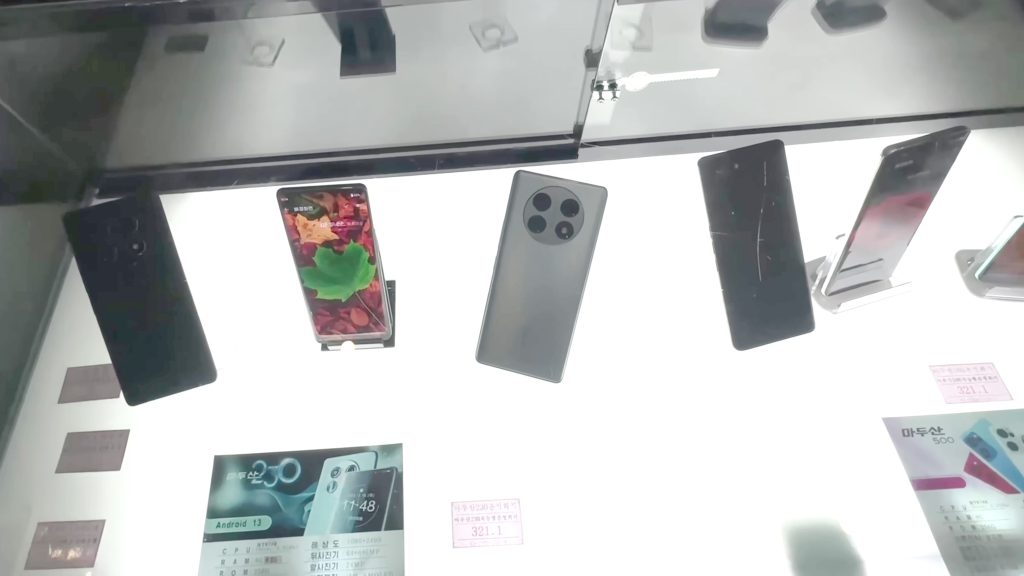
The price of Madusan-brand smartphones is visible in a tourist video shot in May 2025 at the Taesong Department Store in Pyongyang. The currency is not listed, but the price range of 211 to 551 is assumed to be US dollars.
Those prices represent a significant investment for many people in the country, but that same is true of smartphone prices in many developing economies. It is also understood there is an active secondhand market, so those with lower incomes can likely find more affordable used handsets.
Data Plans
North Korea has two cellular networks, Koryolink and Kangsong. I obtained the rates for Kangsong’s 3G and 4G service in 2024. The carrier offers a single set of 3G plans, billed in North Korean won, and two sets of 4G plans which differ depending on if payments are made in North Korean won or forex won.
Note that both 3G and 4G plans require a flat rate payment in forex won each month and that there are only two data plans available in domestic won. This appears to be another way the state is soaking up foreign currency in the economy.
Kangsong 3G Network (Foreign currency won-based)
| Category 1 | 110 (forex) won per month | 132 (forex) won / 100MB |
| Category 2 | 440 (forex) won per month | 220 (forex) won / 500MB |
| Category 3 | 286 (forex) won per month | 330 (forex) won / 1GB |
Kangsong 4G Network (Domestic won-based)
| Category 1 | 550 won (forex) per month | 1500 won / 70MB |
| Category 2 | 550 won (forex) per month | 3000 won / 150MB |
Kangsong 4G Network (Foreign currency won-based)
| Category 1 | 550 won (forex) per month | 110 won (forex) / 700MB |
| Category 2 | 550 won (forex) per month | 220 won (forex) / 2GB |
| Category 3 | 550 won(forex) per month | 440 won (forex) / 4GB |
| Category 4 | 550 won(forex) per month | 660 won (forex) / 8GB |
| Category 5 | 550 won(forex) per month | 1,100 won (forex) / 15GB |
| Category 6 | 550 won(forex) per month | 5,500 won (forex) / unlimited |
It’s worth nothing that many users won’t need the unlimited data plan unless they are heavy users of multimedia apps. While there are a couple of video streaming apps available in North Korea, it is presumed that average data consumption each month is lower than in many developed economies.
Leave a Reply
You must be logged in to post a comment.