

Getting reliable information out of North Korea is difficult so analysts often must rely on a drip feed of reports and anecdotes to understand what’s happening in the country beyond state media reporting. This often leads to contradictory information. The answer is usually nuanced and is not well understood outside the country.
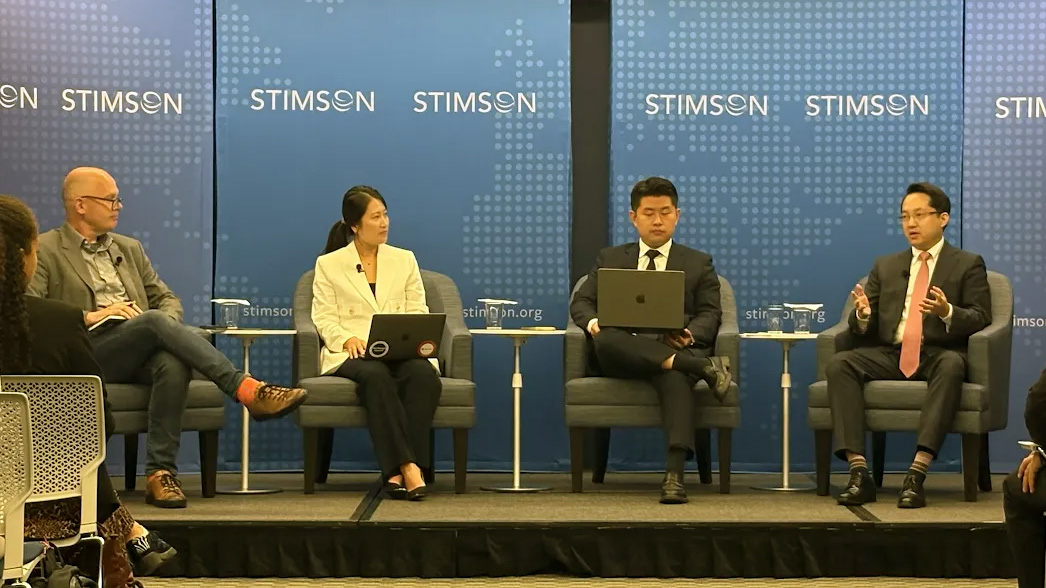
During a recent event at The Stimson Center with a panel of three North Korean escapees, we were asked about the apparent discrepancies in punishments for those caught consuming foreign media. There are reports of people being executed, but also of people given warnings with no further punishment.
Why is there such a big difference in punishment for what is apparently the same crime?
The three escapees on the panel took turns answering the question and explained that it depends on a variety of factors: the content, the status of the person caught, the time of year, and how it was reported.
Gumhyok Kim, who escaped in 2012 and is from Pyongyang, explained that the nature of the content in question is important. Indeed, the Reactionary Ideology and Culture Reject Act that was passed in 2020 does assign different levels of punishment for different types of content.
“According to the law, if I only watch a South Korean drama then I could be arrested for more than five years but if I spread it to my colleagues or if I sell it for benefit then it is more than 50 years or in some cases public execution,” he said.
Articles 27 of the law address punishment for offenses related to South Korean content:
“Anyone who has seen, heard, or stored [South Korean] films, videos, edited materials, books, songs, paintings, photographs, or any such material, or who infringes or disseminates puppet songs, paintings, photographs, or designs, shall be sentenced to labor reform for 5 to 10 years. In severe cases, the penalty is labor reform for more than 10 years.”
And Article 28 addresses content from “hostile countries,” which includes South Korea but is broader, concluding with this:
“If a large number of hostile countries’ films, videos, edited materials, or books are imported, distributed or circulated to many people, or if they are organized or encouraged to collectively watch or view, they shall be punished by forced labor reform or the death penalty.”
But the law is only one part of the puzzle.
“I would say [it’s] definitely related to the content and also the system, how the incident was reported to the central party,” said Hyunseung Lee, who defected in 2014.
“The way the incident is delivered to the central body is so crucial,” he said. Lee referred to a reported incident where many children were caught watching South Korean dramas and were reported to the Central Party but escaped severe punishment because they are from elite families.
“In some cases, those punishments are real executions,” he said. “This is [usually when it’s] reported to the Central Party and to Kim Jong Un’s desk. The authority for executions is with Kim Jong Un or Kim Jong Un’s office, not other people. So, the Propaganda and Agitation Department cannot execute people, the police cannot execute people, or State Security Agency cannot. They have to be approved by the leadership on the top.”
Punishments also differed according to the time of the year, said Jihyang Kim, who left Hyesan City in 2016. She said surprise inspections of her home were a regular occurrence and involved police officers looking through the house for banned goods or content or people who shouldn’t be there.
She said special events like the birthdays of Kim Jong Il or Kim Jong Un or other major political events would lead to a stricter atmosphere and punishments would be higher.
The explanations go some way to explain the discrepancies in accounts from escapees and from independent human rights organizations and media outlets.